Essay
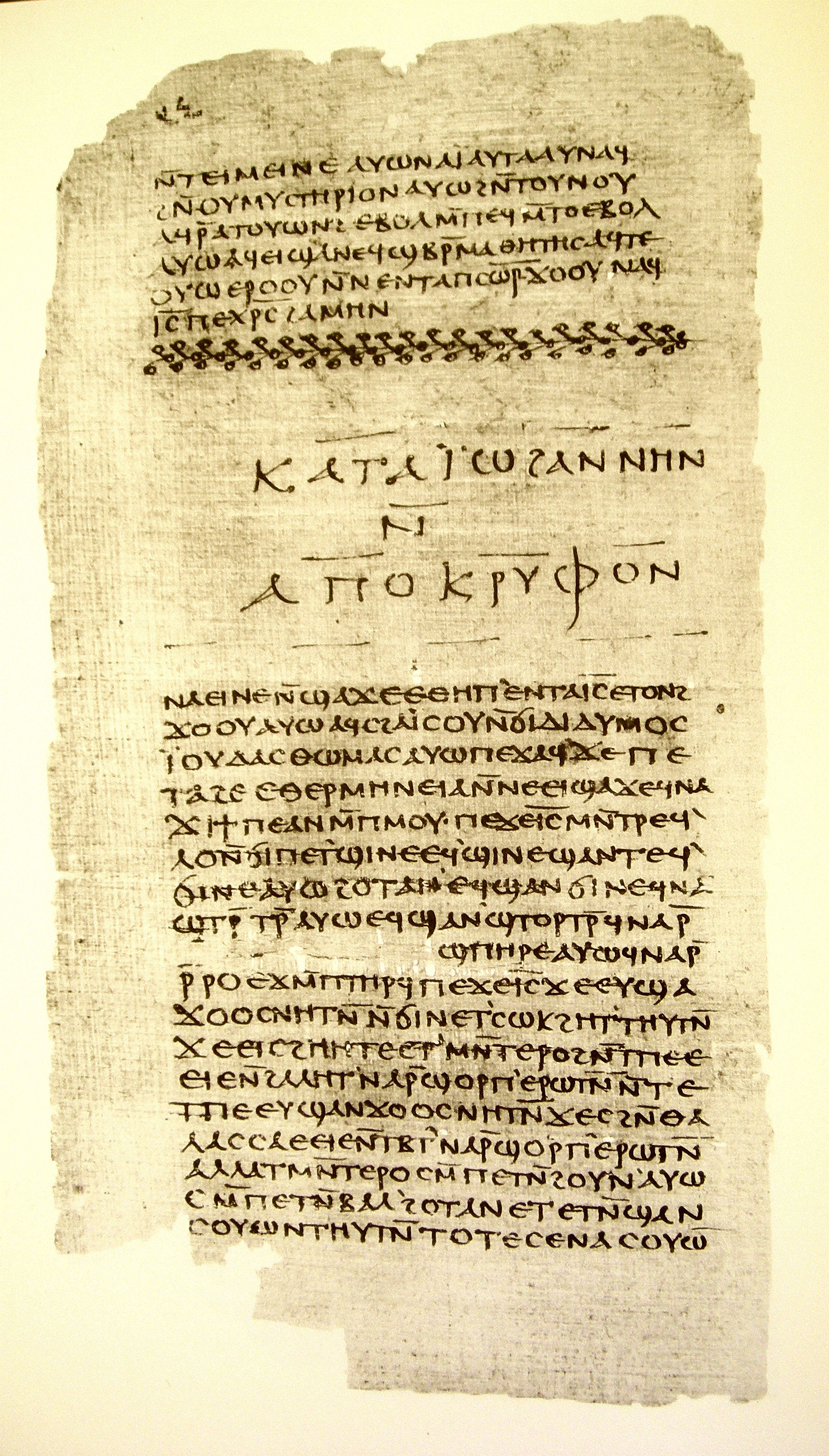
Nag Hammadi Codex II, 4th century CE, containing the Apocryphon of John, the Gospel of Thomas, and the Gospel of Philip. Coptic Museum, Cairo. Public domain.
In the kaleidoscope of early Christianity, where competing visions of faith vied for legitimacy amid a Roman Empire teeming with philosophical and religious currents, the Valentinians emerge as a distinctive and sophisticated phenomenon. Emerging in the second century CE, this Gnostic Christian movement, founded by the enigmatic Valentinus, carved a unique niche within the broader spectrum of religious diversity. Unlike the classic Gnostics, who often scorned the material world with radical dualism, or the proto-orthodox Christians, who coalesced around a nascent apostolic tradition, the Valentinians offered a nuanced cosmology, an integrative community life, and a theology that sought to harmonize disparate strands of thought. Their history, beliefs, and practices reveal a group that was neither wholly alien to its contemporaries nor fully aligned with them, challenging modern assumptions about the boundaries of early Christian identity.
Valentinus, born around 100 CE in Egypt and educated in the intellectual crucible of Alexandria, stands at the heart of this movement. His migration to Rome around 136 CE, during the pontificate of Pope Hyginus, positioned him within the epicenter of Christian development. A charismatic teacher and a contender for the bishopric of Rome, Valentinus's failure to secure that office prompted a schism that birthed Valentinianism. His teachings, blending the early and developing Christian scripture with Hellenistic philosophy and Gnostic cosmology, inspired a following that spread from Northwest Africa to Asia Minor and persisted into the fourth century, despite condemnation by figures like Irenaeus of Lyons and the eventual triumph of Nicene Christianity under Theodosius I's Edict of Thessalonica in 380 CE. The Valentinians' resilience and adaptability underscore their significance, not merely as a "heresy" to be dismissed, but as a vital lens through which to view the fluidity of early Christian thought.
The Valentinians' beliefs are preserved in fragments primarily by hostile heresiologists and rediscovered in the Nag Hammadi texts. At its core lies a monistic theology expressed through a dualistic narrative: an unknowable God (Bythos), a Pleroma of emanated Aeons, and a fallen Sophia whose error births the material world under the Demiurge. Salvation, for Valentinians, hinges on gnosis — direct knowledge — rather than mere faith, yet they extended this hope beyond an elite few, distinguishing them from other Gnostics. Their tripartite belief (pneumatic, psychic, hylic) and integrative worship practices further set them apart, reflecting a willingness to engage with the broader Christian community while maintaining a distinct spiritual identity. The Valentinians' teachings represent a sophisticated fusion of Christian theology, Hellenistic philosophy, and Gnostic cosmology, distinguished by their integrative approach, nuanced anthropology, and adaptability. These qualities differentiate them from both the classic Gnostics and the proto-orthodox Christians of their time.
Valentinus was a figure whose life bridges the intellectual vibrancy of Alexandria and the ecclesiastical ferment of Rome. Born in Phrebonis, a coastal region of Egypt, around 100 CE, he received a Greek education in Alexandria, a city renowned for its synthesis of Jewish, Christian, and Hellenistic traditions. Epiphanius of Salamis suggested that Valentinus encountered the Gnostic philosopher Basilides and may have studied under Theudas, a purported disciple of Paul, though these claims remain contested. This education immersed him in Platonic philosophy and the allegorical methods of Philo, shaping his later theological innovations.
By 136 CE, Valentinus arrived in Rome, a hub of Christian activity under Pope Hyginus. His eloquence and erudition quickly elevated him within the church, where he taught and worshipped alongside other Christians. Clement of Alexandria records that Valentinus's followers claimed apostolic authority through Theudas, a lineage that bolstered his credibility. Around 157 CE, his candidacy for bishop of Rome — an office that would have cemented his influence — faltered, with Anicetus chosen instead. Tertullian suggests this rejection spurred Valentinus to form his own school. Leaving Rome around 160 CE, possibly for Cyprus or back to Alexandria, Valentinus continued refining his system until his death around 180 CE.
Valentinianism flourished in his wake, spreading across the Roman Empire from Gaul to Mesopotamia. By the late second century, it had fractured into Eastern and Western branches, a division noted by heresiologists like Hippolytus. The Eastern school, centered in Syria and Egypt, emphasized cosmological speculation, while the Western, largely Italian, focused on practical theology. Texts like Ptolemy's Letter to Flora and Heracleon's commentary on John attest to a vibrant intellectual tradition, while the presence of a Valentinian presbyter, Florinus, under Pope Victor (189–199 CE) highlights their integration into mainstream Christian life.
The movement thrived through the third century, coexisting with other Christians in shared worship while holding exclusive meetings for initiates. However, the rise of proto-orthodox dominance, fueled by figures like Irenaeus — who devoted much of Adversus Haereses (c. 180 CE) to refuting Valentinianism — signaled its decline. The Nag Hammadi discovery in 1945, including texts like the Gospel of Truth, reveals their persistence into the fourth century, but Theodosius I's 380 CE edict, declaring Nicene Christianity the state religion, marginalized them. By the fifth century, Valentinianism had largely faded, its remnants absorbed into broader Gnostic or mystical currents.
This history challenges the heresiological narrative of Valentinianism as a fleeting aberration. Its geographic reach and longevity suggest a robust appeal, rooted in Valentinus's ability to adapt Gnostic ideas to Christian contexts. Unlike the classic Gnostics, who often isolated themselves, or the proto-orthodox, who sought uniformity, the Valentinians navigated a middle path, integrating and innovating until external pressures overwhelmed them.
Valentinian theology unfolds as a grand narrative of divine emanation, cosmic rapture, and redemptive return, blending Christian motifs with Hellenistic and Gnostic elements. At its apex is Bythos (Depth), the unknowable, infinite God, paired with Sige (Silence), the feminine aspect embodying primordial tranquility and creative thought. Together, they emanate the Pleroma — a "fullness" of thirty Aeons arranged in male-female dyads (e.g., Mind and Truth, Man and Church). These Aeons, semi-independent entities within the Godhead, represent divine attributes, yet their separation from Bythos by Horos (Limit) leaves them ignorant of their ultimate origin.
The drama pivots on Sophia (Wisdom), the youngest Aeon, whose longing to comprehend Bythos disrupts the Pleroma. Her passion births an abortive entity, expelled beyond the Limit by Horos (also called Stauros, "Cross"), a figure unique to Valentinianism with possible Platonic echoes (cf. Plato's Chi-shaped World-Soul). This entity, Sophia Achamoth ("Lower Wisdom"), becomes a world-creative power, giving rise to the Demiurge — identified with the Old Testament God — who crafts the material cosmos from her disordered passions. Unlike the classic Gnostics' wholly malevolent Demiurge, the Valentinian version is ignorant rather than evil, a mitigated dualism reflecting a less hostile view of creation.
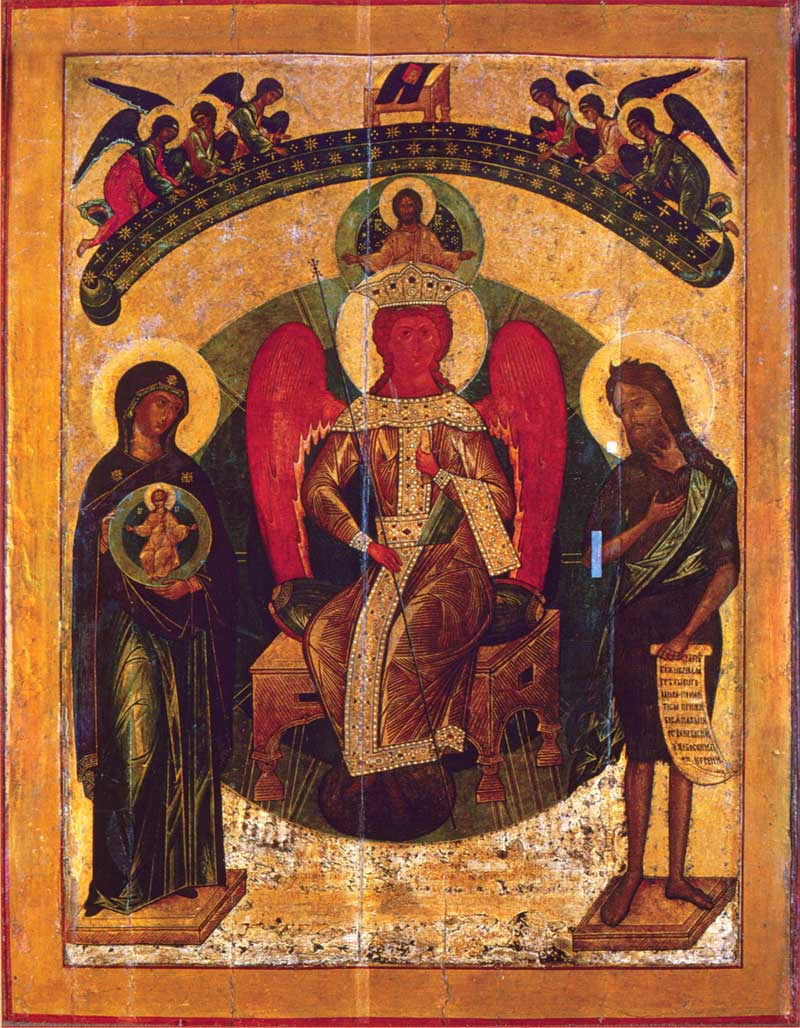
Christology is central to redemption. Jesus, the son of Sophia Achamoth, descends from the Pleroma to awaken humanity's "spiritual seed" — a divine spark within the pneumatic (spiritual) elect. Valentinian texts like the Gospel of Philip suggest a docetic Christ, appearing human but not fully material, sidestepping the proto-orthodox emphasis on bodily incarnation and resurrection. Salvation hinges on gnosis, the recognition of one's divine origin, enabling a return to the Pleroma. Yet, many Valentinians held that psychic (soulish) Christians — those reliant on faith — could achieve a lesser salvation, a concession absent in stricter Gnostic systems.
Their system divides humanity into three types: pneumatic (spiritual, destined for gnosis), psychic (rational, capable of faith-based salvation), and hylic (material, doomed to perish). This tripartition, detailed by Irenaeus (Adversus Haereses 1.7), contrasts with the binary spirit-matter divide of classic Gnostics and the universal redemption of proto-orthodox theology. Valentinianism thus offers a layered cosmology — monistic in its divine unity, dualistic in its narrative — balancing transcendence and accessibility in ways that distinguish it from its contemporaries.
Central to understanding Valentinian community life is their resolute self-identification as Christians, a designation that belies the sectarian label "Valentinian" imposed by their detractors. Far from embracing a distinct moniker, they saw themselves as bearers of an enriched Christian tradition, a point underscored by their seamless participation in broader congregational worship. The Gospel of Philip (Nag Hammadi Codex II, 52.21–24) asserts, "The chrism is superior to baptism, for it is from the word 'chrism' that we have been called Christians," framing their esoteric rites as enhancements of universal Christian identity rather than a rupture from it. Irenaeus, despite his polemical intent, confirms this integration, noting their presence alongside proto-orthodox believers in shared rituals (Adversus Haereses 1.6.4). David Brakke highlights this in his lectures, emphasizing that the Valentinians "did not call themselves Valentinians" but claimed the Christian mantle fully (Brakke, Lecture 11). The term "Valentinian," coined by heresiologists like Irenaeus and Tertullian, thus reflects a strategy of exclusion rather than an internal reality, revealing a group that sought to deepen, not divide, the Christian fold — a stance that shaped their communal practices and social engagement.
While the Valentinians' cosmological speculations dazzle with their intricacy, their daily practices and community life reveal a pragmatic engagement with the world, distinguishing them from the more ascetic or insular tendencies of other Gnostic groups. Unlike the classic Gnostics — such as the Sethians or Marcionites — who often shunned societal norms in favor of radical withdrawal, the Valentinians participated in broader Christian congregations, blending seamlessly into public worship while maintaining exclusive gatherings for initiates. This dual engagement reflects their adaptability and their nuanced view of the material realm as a flawed but not irredeemable creation.
Evidence from Irenaeus (Adversus Haereses 1.6.4) suggests that Valentinians attended mainstream Christian services, partaking in baptism and the Eucharist alongside proto-orthodox believers. Yet, they imbued these rituals with esoteric meanings. Baptism, for instance, was not merely a cleansing of sin but an initiation into gnosis, awakening the pneumatic seed within the elect. The Gospel of Philip (Nag Hammadi Codex II, 67.27–30) describes it as a "marriage chamber," uniting the soul with its divine counterpart in the Pleroma, a stark contrast to the proto-orthodox focus on forgiveness and adoption into God's family. The Eucharist similarly took on a mystical hue, symbolizing participation in the Aeonic fullness as a deeper interpretation of Christ's sacrifice.
Beyond these shared rites, Valentinians held private meetings where advanced teachings unfolded. Heracleon's commentary on John, preserved in fragments by Origen, hints at a tiered instruction system, with novices learning basic ethics and cosmology while the "perfect" delved into the mysteries of the Pleroma and the Enoch-like ascent of the soul. These gatherings fostered a sense of community among the pneumatics, though they welcomed psychics (those capable of faith) into lower ranks, an inclusivity less common among classic Gnostics. The Tripartite Tractate (Nag Hammadi Codex I, 118.14–119.17) underscores this gradation, portraying the church as a "school" for all three human types, not just an elite cadre.
Socially, Valentinians diverged from the stereotype of Gnostic detachment. Unlike the Encratites, who rejected marriage and procreation as entanglements with the Demiurge's realm, Valentinians embraced family life. The Gospel of Philip (79.25–80.5) praises marriage as a "mystery" mirroring the Aeonic syzygies, suggesting procreation could propagate the spiritual seed — a view aligning with Hellenistic norms and contrasting sharply with the asceticism of contemporaries like Tatian. Economically, they participated in urban trades and civic life, as evidenced by their prominence in cities like Rome and Lyons, where Irenaeus encountered them. This integration reflects their mitigated dualism: the material world, though flawed, was a stage for spiritual growth, not a prison to escape.
The Valentinians' sacramental practices offer a window into their unique blend of Christian identity and esoteric theology, setting them apart from proto-orthodox rites while reflecting their nuanced cosmology. While they participated in familiar Christian rituals like baptism and the Eucharist, they infused these with meanings rooted in their Pleroma-centric worldview, emphasizing gnosis over atonement. These differences, detailed in texts like the Gospel of Philip, reveal a sacramental system that both paralleled and diverged from early Christian norms, underscoring their claim to a deeper Christian truth.
Baptism, a cornerstone of early Christianity, took on a transformative role for the Valentinians beyond the proto-orthodox cleansing of sin. In the Gospel of Philip (Nag Hammadi Codex II, 67.27–30), it is described as a "marriage chamber," uniting the initiate's soul with its divine syzygy (counterpart) in the Pleroma. This ritual awakened the pneumatic seed, marking entry into gnosis rather than mere forgiveness, a shift Irenaeus critiques as subverting apostolic intent (Adversus Haereses 1.21.1). Proto-orthodox baptism, as seen in the Didache (7.1–3), focused on repentance and adoption into God's family through water and the Trinitarian formula, lacking the Valentinian emphasis on cosmic reunion. The Valentinians often paired baptism with chrism (anointing), which the Gospel of Philip (74.12–15) elevates above water, stating, "Through chrism we become Christians," linking it to their name and the anointing of the spiritual elect — a practice less prominent in early orthodox circles, where anointing was secondary if present at all.
The Eucharist, too, diverged in meaning. For proto-orthodox Christians, it was a memorial of Christ's sacrifice, rooted in the Last Supper and Paul's instructions (1 Corinthians 11:23–25), emphasizing communal unity and bodily resurrection. Valentinians reinterpreted it as a mystical participation in the Pleroma's fullness. The Gospel of Philip (75.14–21) calls it "the flesh of the Savior," but not as a literal body — instead, a symbolic act uniting the pneumatic with the divine Aeons, bypassing the material focus of orthodox theology. Irenaeus accuses them of "mocking the true Eucharist" with such allegories (Adversus Haereses 1.21.4), highlighting their docetic leanings. This esoteric framing contrasted with the proto-orthodox stress on physical bread and wine as transformative elements, reflecting the Valentinians' mitigated view of matter as a vehicle, not an end.
Compared to classic Gnostic groups, Valentinian sacraments were less ascetic but still esoteric. Sethians, for instance, practiced "five seals" (possibly baptisms or anointings) as a radical ascent ritual (Trimorphic Protennoia, Nag Hammadi Codex XIII, 48.10–15), rejecting material creation outright, while Valentinians adapted mainstream rites to their cosmology, maintaining a Christian veneer. This balance — neither fully orthodox nor wholly Gnostic — underscored their integrative ethos. David Brakke notes their sacraments as "a bridge between public Christianity and private revelation" (Brakke, Lecture 11), a flexibility that allowed them to worship alongside others while cultivating an inner circle of initiates. These rituals, blending familiarity with innovation, reinforced their self-identification as Christians, even as they provoked proto-orthodox ire and distinguished them within the Gnostic spectrum.
This balance — participating in society while cultivating an inner esoteric identity — set the Valentinians apart. They neither fully withdrew like classic Gnostics nor fully conformed like proto-orthodox Christians, crafting a community that was both in and beyond the world, a practical extension of their theological flexibility.
The Valentinians' distinctiveness shines most clearly when juxtaposed against the broader Gnostic milieu, often termed "classic Gnosticism" for groups like the Sethians, Basilideans, or Marcionites. While sharing a Gnostic emphasis on direct knowledge as salvation, the Valentinians tempered the radical dualism, elitism, and isolationism of their peers, offering a more integrative and accessible spirituality.
In cosmology, classic Gnostics posited a stark opposition between a transcendent God and an evil material realm crafted by a malevolent Demiurge. The Sethian Apocryphon of John, for instance, depicts the Demiurge (Yaldabaoth) as a rebellious tyrant who traps divine sparks in flesh out of ignorance and malice. Valentinians, however, softened this narrative. Their Demiurge, born of Sophia Achamoth's error, is misguided rather than wicked, ignorant of the Pleroma but not inherently antagonistic. The Tripartite Tractate (100.20–101.10) portrays him as a craftsman operating within a divine plan, his creation flawed yet capable of redemption — a mitigated dualism that echoes Plato's Timaeus more than the radical rejection of matter in Sethian texts.
This attitude extended to the material world. Classic Gnostics often treated creation as a cosmic mistake, advocating ascetic withdrawal — Marcion, for example, renounced the Old Testament God and its works entirely. Valentinians, by contrast, saw the cosmos as a distorted reflection of the Pleroma, redeemable through gnosis. The Gospel of Truth (Nag Hammadi Codex I, 24.20–25.10) likens the world to a dream from which one awakens, not a dungeon to flee, aligning with their willingness to engage socially and ritually with non-pneumatics.
Community structure further diverged. Classic Gnostic groups like the Sethians cultivated an elitist ethos, restricting salvation to a predestined few with innate divine sparks, as seen in the Gospel of Judas (Codex Tchacos, 44.15–45.20). Valentinians expanded this horizon. Their tripartite anthropology — pneumatic (spiritual), psychic (soulish), and hylic (material) — allowed psychics, who pursued faith rather than gnosis, a secondary salvation in a middle realm, while hylics faced dissolution. Irenaeus (Adversus Haereses 1.6.1–2) critiques this as a ploy to infiltrate orthodox churches, but it reflects a pragmatic inclusivity absent in stricter Gnostic circles.
Salvation's mechanism also differed. Classic Gnostics tied redemption to a cosmic liberation of all divine sparks, often with little regard for individual agency beyond the elect. Valentinians emphasized personal gnosis, yet framed it as a process open to instruction and ritual, not a fixed destiny.
These distinctions — mitigated dualism, a redemptive view of creation, broader community, and accessible salvation — position the Valentinians as a bridge between Gnostic radicalism and Christian universality, a hybrid stance that fueled both their appeal and their vilification.
Against the proto-orthodox Christians — who would evolve into the Nicene orthodoxy of the fourth century — the Valentinians present a striking contrast in authority, Christology, salvation, and ecclesiology. These differences, often caricatured by heresiologists as heretical distortions, reveal a fundamentally different approach to Christian identity, rooted in esoteric interpretation rather than institutional consolidation.
Authority was a large contention. Proto-orthodox leaders like Ignatius of Antioch and Irenaeus grounded their faith in apostolic succession and a literal reading of scripture, culminating in a canon that excluded Gnostic texts. The Valentinians, while engaging with scriptures like the Gospels and Paul's letters, favored allegorical exegesis. Heracleon's commentary on John reinterprets the Samaritan woman as a symbol of psychic redemption, a method Irenaeus (Adversus Haereses 1.8.1) decries as twisting scripture to fit preconceived myths. Valentinus himself, per Clement of Alexandria (Stromata 7.17), claimed secret teachings from Paul via Theudas, bypassing the public apostolic tradition — a move that empowered individual insight over collective dogma. Valentinians did recognize Apostolic authority, citing their own as paramount.
A provocative dimension of Valentinian authority emerges in their potential role as early proponents of apostolic succession, a concept later wielded against them by proto-orthodox leaders. Clement of Alexandria reports that Valentinus's followers traced their teachings to Theudas, a disciple of Paul, asserting a direct apostolic lineage to legitimize their esoteric doctrines (Stromata 7.17). This claim, articulated during Valentinus's Roman tenure (c. 136–160 CE), predates Irenaeus's systematic catalog of bishops from Peter and Paul (Adversus Haereses 3.3–4, c. 180 CE), raising the possibility that the Valentinians pioneered this argumentative strategy. David Brakke notes their appeal to Pauline authority as a cornerstone of their legitimacy (Brakke, Lecture 11), suggesting they framed gnosis as a secret tradition handed down from the apostle. Unlike the proto-orthodox, who formalized succession into a hierarchical episcopacy to ensure doctrinal unity, the Valentinian model remained fluid — a teacher-disciple transmission focused on esoteric insight rather than institutional control.
Christology deepened the divide. Proto-orthodox theology, articulated by Justin Martyr and later Athanasius, insisted on the full incarnation of Christ — God become flesh, crucified, and bodily resurrected — to redeem humanity. Valentinians leaned toward docetism, viewing Jesus as a divine emissary who only appeared human. The Gospel of Philip (57.10–15) describes his flesh as symbolic, a "veil" for the pneumatic seed, while the Tripartite Tractate (114.20–115.5) posits a triadic redemption — spiritual, psychic, and material — contrasting with the singular, universal atonement of orthodoxy. This minimized the cross's physicality, a point Tertullian (Against the Valentinians 27) mocks as denying Christ's suffering.
Salvation's path diverged sharply. For proto-orthodox Christians, faith, repentance, and good works, underpinned by baptism and obedience to the church, secured eternal life. Valentinians prioritized gnosis, the esoteric knowledge of one's divine origin, over faith alone. The Gospel of Truth (21.25–22.10) frames salvation as awakening from ignorance, a process reserved primarily for pneumatics, though psychics could attain a lesser fate through faith. This intellectual emphasis clashed with the proto-orthodox blend of belief and praxis, earning accusations of elitism from Irenaeus.
Ecclesiologically, the Valentinians lacked the hierarchical rigidity of their rivals. While Ignatius (Letter to the Smyrnaeans 8) insisted on bishops, presbyters, and deacons as guarantors of unity, Valentinian communities operated as loose networks of teachers and initiates, often within orthodox congregations. The Letter to Flora suggests a mentorship model, not a clerical chain, a flexibility that allowed infiltration but resisted centralized control — a stark contrast to the proto-orthodox push for a unified episcopacy.
These differences cast the Valentinians as a radical alternative to the emerging orthodox consensus, a tension that fueled their eventual marginalization.
The Valentinians' intellectual legacy survives through a patchwork of texts, both hostile and sympathetic, offering a fragmented yet vivid portrait of their thought. Primary sources fall into two camps: heresiological accounts from proto-orthodox critics and the Nag Hammadi library's revelations, unearthed in 1945 near Egypt's Chenoboskion.
Heresiologists like Irenaeus (Adversus Haereses, c. 180 CE), Tertullian (Against the Valentinians, c. 207 CE), and Hippolytus (Refutation of All Heresies, c. 230 CE) provide the earliest detailed descriptions, albeit with polemical bias. Irenaeus, bishop of Lyons, offers the most comprehensive critique, detailing Valentinus's Pleroma, Sophia's fall, and the tripartite structure, though he frames it as a dangerous fiction. Tertullian mocks their complexity, likening their Aeons to a "cucumber patch," while Hippolytus distinguishes Eastern and Western schools. These accounts, while invaluable, distort through caricature, necessitating caution in their use.
The Nag Hammadi find revolutionized Valentinian studies, yielding texts like the Gospel of Truth, Gospel of Philip, Tripartite Tractate, and Treatise on Resurrection. The Gospel of Truth (Codex I), possibly by Valentinus himself, is a poetic meditation on gnosis as liberation from error, rich with imagery of awakening and return. The Gospel of Philip (Codex II) blends sacramental theology with cosmological insights, notably on marriage and the Eucharist. The Tripartite Tractate (Codex I), the longest Valentinian work, systematizes their theology, from Bythos to the Demiurge's creation, with a philosophical depth rivaling Plotinus. Fragments like Ptolemy's Letter to Flora (preserved by Epiphanius, Panarion 33) and Heracleon's Johannine commentary (via Origen) round out this corpus, showcasing their exegetical finesse.
These texts, written in Coptic but translated from Greek originals (c. 150–300 CE), confirm and complicate the heresiological record. They reveal a movement more poetic and inclusive than Irenaeus suggests, though their esoteric tone validates his charge of secrecy. The Nag Hammadi discovery shifted scholarship — e.g., Elaine Pagels (The Gnostic Gospels, 1979) — from viewing Valentinians as mere heretics to recognizing their contributions to early Christian diversity, though debates persist over their authorship and orthodoxy's influence on their preservation.
The Valentinians, emerging from Valentinus's fertile intellect, stand as a bridge between the radical dualism of classic Gnosticism and the institutional unity of proto-orthodox Christianity. Their history — from Alexandria to Rome and beyond — traces a movement that thrived on intellectual vigor and communal adaptability, only to wane under the consolidating forces of imperial Christianity. Their beliefs, with a Pleroma of Aeons, a redeemable Demiurge, and a tripartite humanity, fuse Christian hope with Hellenistic depth, offering salvation through gnosis while extending a hand to the faithful. Their practices — integrated yet esoteric — reflect this balance, engaging the world without surrendering their distinctiveness.
Compared to classic Gnostics, the Valentinians softened dualism and elitism, crafting a cosmology and community that embraced creation's potential. Against proto-orthodox Christians, they prioritized knowledge over authority, docetism over incarnation, and fluidity over hierarchy, embodying a Christian alternative that orthodoxy could not abide.
Their influence echoes in later mysticism found in Manichaeism, medieval Catharism, and Renaissance esotericism, and challenges us to rethink early Christianity's boundaries. Far from a footnote, the Valentinians reveal a faith that was plural, dynamic, and unafraid to wrestle with the divine's mysteries. Their story asks us to reconsider what it means to seek truth at the crossroads of spirit and matter, a question as urgent now as it was in Valentinus's day.
Bibliography
Primary Sources and Translations
Secondary Sources